
Overview of the Caster Industry
Casters are wheels installed on vehicles, machinery, and other mobile equipment to facilitate movement. Caster design aims to improve mobility, flexibility, and load-bearing capacity. They typically consist of a wheel, bracket, and connecting parts, and can be selected in different materials, sizes, and load capacities depending on the specific application.
Currently, casters can be classified by function into fixed casters, swivel casters, and braking casters; by material into rubber casters, polyurethane casters, and nylon casters; and by load capacity into miniature casters, light-duty casters, medium-duty casters, heavy-duty casters, and extra-heavy-duty casters.
Caster Industry Value Chain
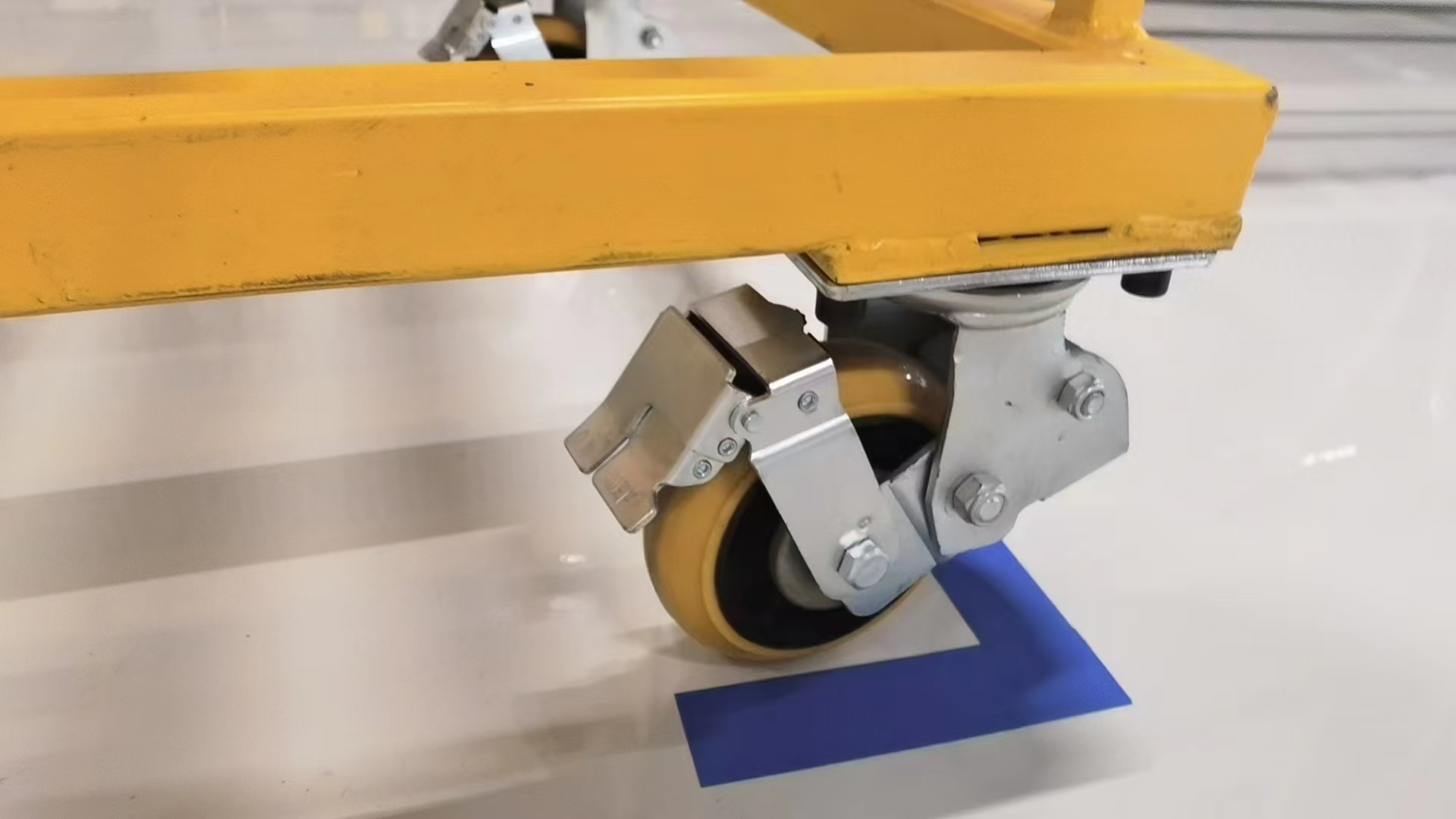
From a value chain perspective, the upstream market of the caster industry mainly consists of raw materials and components. Based on the product structure of casters, the main components include bearings, wheels, and brackets, which are primarily made of steel, non-ferrous metals, plastics, and rubber. The midstream involves the manufacturing of casters, where companies process upstream raw materials and components to produce products that meet downstream demands. The downstream market refers to the main application markets for casters, including medical, industrial, commercial, logistics and transportation, and furniture. In the medical field, casters are used for the movement of medical equipment such as operating tables and wheelchairs; in the industrial field, casters are mainly used for moving heavy equipment; in the commercial field, casters are mainly used for supermarket shopping carts, catering service carts, and office furniture; in the logistics and transportation field, casters are mainly used for hand trucks and forklifts for the rapid handling of goods; and in the furniture field, casters are used to facilitate the easy movement and adjustment of furniture.
Casters, as a common component in our daily lives, are widely used in various hand trucks and mobile equipment. In these application scenarios, casters need to withstand significant weight and frequent friction, making the choice of manufacturing materials crucial. Steel, due to its excellent physical properties and processing characteristics, has become the preferred material for caster manufacturing. Steel possesses extremely high strength and hardness, allowing it to withstand the immense pressure generated during the use of casters. Whether under heavy load conditions or during high-speed movement, steel maintains its structural stability and integrity, thus ensuring the safe use of casters. In recent years, my country's steel production has shown an overall upward trend, reaching 1.4 billion tons in 2024, a year-on-year increase of 1.15%. This growth trend will be beneficial to the production and manufacturing of casters, thereby guaranteeing market supply.
Rubber is also one of the main raw materials for casters. It mainly includes natural rubber and synthetic rubber. Natural rubber is widely used due to its excellent elasticity and flexibility, while synthetic rubber casters offer greater customization, allowing for adjustments in hardness, wear resistance, oil resistance, and other properties to suit specific application scenarios. After years of development, my country's synthetic rubber industry has formed a relatively complete industrial system, and its output continues to rise. According to data from the National Bureau of Statistics, from 2019 to 2024, China's synthetic rubber output increased from 7.338 million tons to 9.219 million tons; in the first quarter of 2025, China's synthetic rubber output reached 2.33 million tons, a year-on-year increase of 10.50%.
Caster Industry Development Status
Casters were initially introduced to my country mainly from Western countries, used in mechanical equipment and transportation tools. Over time, their application scope has gradually broadened, penetrating into many domestic industrial fields. In recent years, my country's caster manufacturing industry has shown strong development momentum and achieved remarkable achievements. From initial simple imitation to current independent research and development, my country's caster technology has achieved a qualitative leap. At the same time, with the improvement of domestic industrial automation and the rapid development of logistics, warehousing, furniture, and other industries, the market demand for caster products has shown a continuous growth trend. This trend not only provides broad development space for the caster manufacturing industry but also prompts enterprises to continuously increase R&D investment and improve product quality and performance to meet increasingly diversified market demands. According to statistics, since 2019, the market size of China's caster industry has continued to rise, reaching 33.636 billion yuan in 2024, a year-on-year increase of 7.41%. From the perspective of segmented markets, industrial casters are developing strongly. Industrial casters are wheel devices specifically used in industrial environments, mainly for the movement and support of factories, mechanical equipment, transportation tools, and logistics facilities. In recent years, with the growth of my country's economy and the advancement of industrialization, the demand for industrial casters has continued to rise. Data shows that the market size of China's industrial caster industry reached 3.802 billion yuan in 2015, and grew to 8.409 billion yuan by 2024, representing a compound annual growth rate of 9.2%.
